
Understanding GNSS Jamming & Spoofing
What is GNSS Jamming?
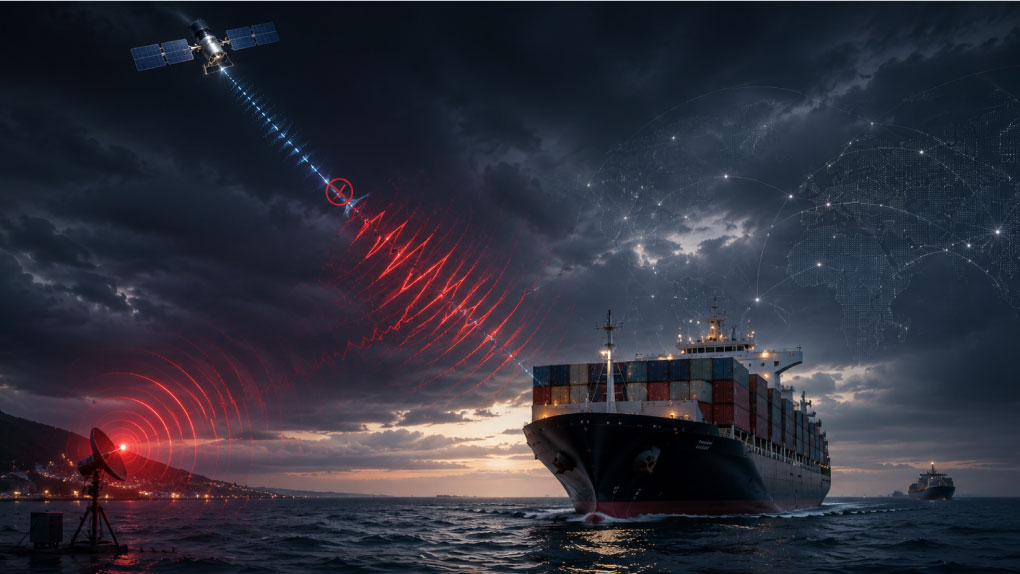
GNSS jamming occurs when external radio frequency signals disrupt or overpower satellite signals, resulting in:
- Loss of positioning data
- Intermittent tracking failures
- Reduced navigation accuracy
- Gaps in vessel monitoring systems
Jamming is often unintentional (environmental or electronic interference) but can also be deliberate in sensitive regions.
What is GNSS Spoofing?
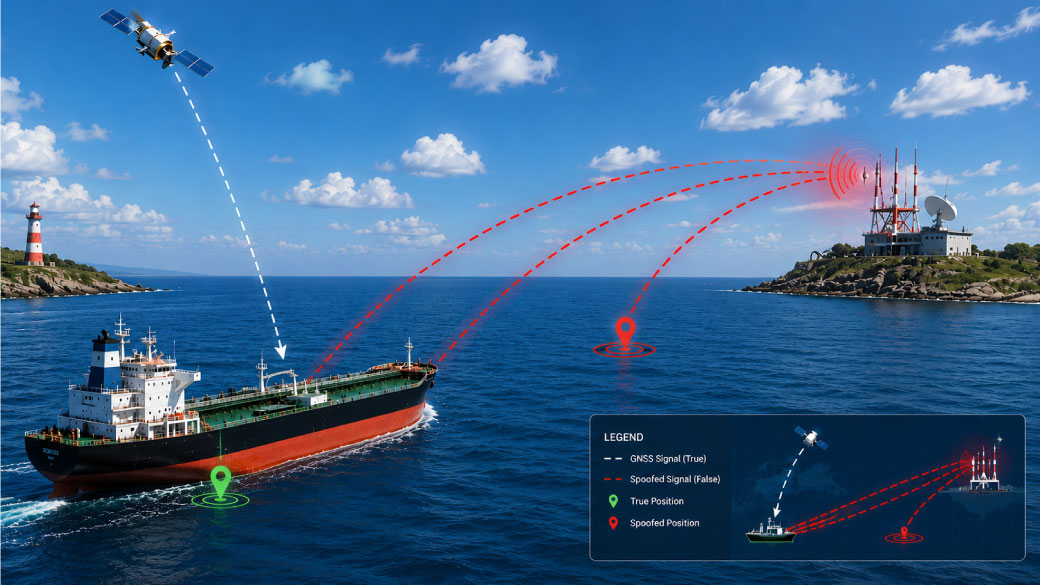
Spoofing is more critical. It involves the transmission of false GNSS signals that mislead a receiver into calculating incorrect positions.
This can lead to:
- False vessel location reporting
- Misleading route tracking
- Delayed or incorrect emergency response
- Operational confusion in fleet monitoring systems
Unlike jamming, spoofing can be harder to detect because the system still shows a “valid” position.
Operational Challenges for Fleet Owners
GNSS interference directly impacts:
- Vessel tracking reliability
- Fleet visibility across regions
- Emergency response accuracy (SSAS)
- Compliance and reporting integrity
- Operational planning and coordination
In modern maritime environments, position trust is as important as position availability.
Can GNSS jamming affect my SSAS distress alert?
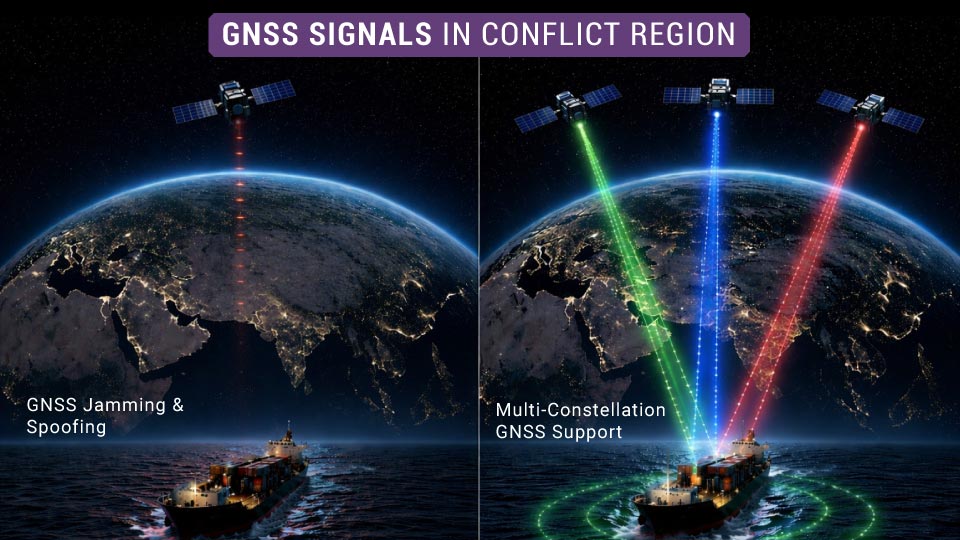
Yes. If your SSAS device relies on a single GNSS constellation and that signal is jammed, the alert may transmit with an incorrect or missing position. The FMT-SSAS-V1 mitigates this by supporting multiple constellations with remote failover.
How do I know if my vessel is experiencing spoofing?
Common indicators include sudden position jumps, the vessel appearing in an inland or impossible location, or discrepancies between AIS-reported and tracker-reported positions. A multi-constellation device significantly reduces vulnerability to spoofing.
Can the signal source be changed remotely?
Yes. Both FMT-SSAS-V1 and FMT-MAT-V1 support over-the-air configuration.
Which regions have high GNSS interference risk?
Known high-risk zones include the Black Sea, Red Sea, Eastern Mediterranean, Gulf of Guinea, and parts of the Arctic. Interference is increasingly reported in other commercial shipping corridors as well.